District → Rohtas
Rohtas is a district in the Bihar of India. Covering a total area of 3881 km², Rohtas is home to a population of 2959918 people as per the 2011 census. The district has a population density of 763 inhabitants per square kilometre and comprises about 460345 houses. district includes approximately 1717 villages.
For administrative purposes, the Rohtas district is divided into Subdivisions, Blocks, Police Stations (PS), and Community Development Blocks (C.D.Blocks). In India, a C.D.Block represents the next level of administrative division after the Subdivision in many regions. Its important to note that in some Indian states, C.D.Blocks are synonymous with Subdivisions.
A C.D.Block is a designated rural area for administration and development in India. It is managed by a Block Development Officer (BDO) and encompasses several gram panchayats, which are local administrative units at the village level.
The largest Subdivision in Rohtas district is Nauhatta, which spans an area of 405 km², while Suryapura is the smallest Subdivision with an area of 50 km². Sasaram is also the most populous Subdivision with 358283 people, whereas Suryapura is the least populous with 57529 people. There are 19 Subdivisions in Rohtas district.
| # | Subdivisions(CD Block) | Area (km²) | Population (2011) | Density (km²) |
|---|---|---|---|---|
| 1 | Akorhi Gola | 93 | 120145 | 1,293 |
| 2 | Bikramganj | 142 | 163565 | 1,149 |
| 3 | Chenari | 257 | 131528 | 512 |
| 4 | Dawath | 115 | 108455 | 940 |
| 5 | Dehri | 174 | 275014 | 1,582 |
| 6 | Dinara | 311 | 225468 | 724 |
| 7 | Karakat | 202 | 209284 | 1,036 |
| 8 | Kargahar | 325 | 225082 | 694 |
| 9 | Kochas | 237 | 170025 | 717 |
| 10 | Nasriganj | 140 | 138936 | 991 |
| 11 | Nauhatta | 405 | 94065 | 232 |
| 12 | Nokha | 166 | 173327 | 1,044 |
| 13 | Rajpur | 71 | 75213 | 1,055 |
| 14 | Rohtas | 310 | 86049 | 277 |
| 15 | Sanjhauli | 66 | 62621 | 945 |
| 16 | Sasaram | 289 | 358283 | 1,241 |
| 17 | Sheosagar | 346 | 176080 | 509 |
| 18 | Suryapura | 50 | 57529 | 1,150 |
| 19 | Tilouthu | 181 | 109249 | 604 |
The population is distributed between urban and rural areas as follows:
| Particulars | Rural | Urban | Total |
|---|---|---|---|
| Total Population | 2532153 | 427765 | 2959918 |
| Male Population | 1318276 | 225270 | 1543546 |
| Female Population | 1213877 | 202495 | 1416372 | Population Density | 667 / km² | 4946 / km² | 763 / km² |
The distribution of households in the Rohtas is:
| Rural Households | Urban Households | Total Households |
|---|---|---|
| 390394 | 69951 | 460345 |
Showing 3 of 5 places

The Ramchaura Mandir, Bihar is a prominent Temple dedicated to Lord Ram located in Hajipur, Rohtas, Bihar, India. The b
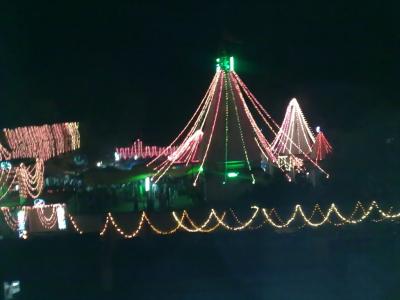
The Pataleshwar Mandir, Bihar is a prominent Temple dedicated to Lord Shiva located in Hajipur, Rohtas, Bihar, India. T
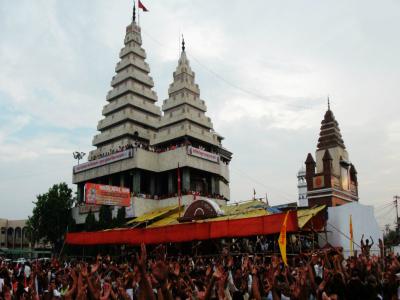
The Mahavir Mandir, Bihar is a prominent Temple dedicated to Lord Hanuman located in Patna, Rohtas, Bihar, India. The b
Q: What is the total area of Rohtas district?
A: The total area of Rohtas district is 3881 km².
Q: What is the population of Rohtas district according to the 2011 census?
A: According to the 2011 census, the population of Rohtas district is 2959918.
Q: How many villages are there in Rohtas district?
A: There are approximately 1717 villages in Rohtas district.
Q: What is the population density of Rohtas district?
A: The population density of Rohtas district is 763 inhabitants per square kilometre.
Q: How many houses are there in Rohtas district?
A: There are about 460345 houses in Rohtas district.
Q: How is the Rohtas district administratively divided?
A: For administrative purposes, Rohtas district is divided into Subdivisions, Blocks, Police Stations (PS), and Community Development Blocks (C.D.Blocks).
Q: What is a C.D.Block in India?
A: A C.D.Block (Community Development Block) is a designated rural area for administration and development in India, managed by a Block Development Officer (BDO) and encompassing several gram panchayats.
Q: Which is the largest Subdivision in Rohtas district by area?
A: The largest Subdivision in Rohtas district by area is Nauhatta, which spans an area of 405 km².
Q: Which is the smallest Subdivision in Rohtas district by area?
A: The smallest Subdivision in Rohtas district by area is Suryapura, with an area of 50 km².
Q: Which Subdivision in Rohtas district has the largest population?
A: The Subdivision with the largest population in Rohtas district is Sasaram, with a population of 358283 people.
Q: Which Subdivision in Rohtas district has the smallest population?
A: The Subdivision with the smallest population in Rohtas district is , with a population of 57529 people.
Q: How many Subdivisions are there in Rohtas district?
A: There are 19 Subdivisions in Rohtas district.
Q: What is the male population of Rohtas district?
A: The male population of Rohtas district is 20,727.
Q: What is the female population of Rohtas district?
A: The female population of Rohtas district is 16,115.
Q: How many villages in Rohtas district have a population of less than 100?
A: There are 386 villages in Rohtas district with a population of less than 100.
Q: How many villages in Rohtas district have a population between 100 and 499?
A: There are 277 villages in Rohtas district with a population between 100 and 499.
Q: How many villages in Rohtas district have a population between 500 and 999?
A: There are 445 villages in Rohtas district with a population between 500 and 999.
Q: How many villages in Rohtas district have a population between 1000 and 1999?
A: There are 526 villages in Rohtas district with a population between 1000 and 1999.
Q: How many villages in Rohtas district have a population between 2000 and 2999?
A: There is 199 village in Rohtas district with a population between 2000 and 2999.
Q: How many villages in Rohtas district have a population between 3000 and 3999?
A: There is 74 village in Rohtas district with a population between 3000 and 3999.
Q: How many villages in Rohtas district have a population between 4000 and 4999?
A: There is 38 village in Rohtas district with a population between 4000 and 4999.
Q: How many villages in Rohtas district have a population of 5000 and above?
A: There is 52 village in Rohtas district with a population of 5000 and above.
| Total Population | Villages in Sub District Of Rohtas |
|---|---|
| Less than 100 | 386 |
| 100-499 | 277 |
| 500-999 | 445 |
| 1000-1999 | 526 |
| 2000-2999 | 199 |
| 3000-3999 | 74 |
| 4000-4999 | 38 |
| 5000 And Above | 52 |
